Remote Microphone Technology For When Hearing Is “Normal” But Listening Is Still Hard
Your child may pass every hearing test and still struggle to understand what’s being said:
- Saying “what?” over and over
- Missing parts of directions
- Struggling to follow conversations in noise
- Becoming exhausted from listening all day
If this sounds familiar, the issue is often not hearing but how the brain processes sound. In many cases, the most immediate and effective support is a remote microphone system.
In a classroom, the teacher’s voice is often too far away or mixed with background noise for a child with auditory processing difficulties to access clearly. Remote microphone technology works by sending the teacher’s voice directly to your child’s ears, making a significant difference in their ability to understand and focus on instruction.
What Is the Roger Focus II System?
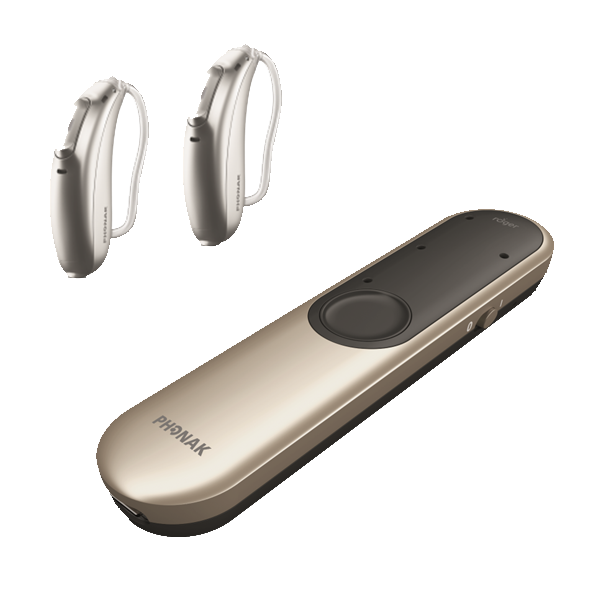
The Roger Focus II is a discreet, ear-level remote microphone system designed to help individuals hear clearly in noisy environments.
It consists of:
- Small receivers worn by the student behind the ears (not hearing aids)
- A wireless microphone worn by the speaker (teacher, parent, instructor)
The system works by sending the teacher’s voice directly to the listener’s ears, reducing the effects of:
- Background noise
- Distance
- Reverberation
This creates a clear, consistent signal as if the speaker is talking right next to the listener.
Why This Matters for Children with Listening Difficulties
People with Auditory Processing Disorder (APD) often find it difficult to distinguish and retain what they hear in background noise or to focus on one ear when necessary. They may also struggle to block out low-level background noises that others can easily ignore, such as air conditioners, shuffling papers, computers humming, people coughing, and pens clicking.
This challenge is especially difficult for those with amblyaudia, where sounds from the dominant ear can overshadow information from the weaker ear, leading to distortion and difficulty understanding speech in noisy environments. This can mimic attention deficits, but it stems from impaired auditory processing skills rather than a lack of focus.
Since classrooms frequently have background noise and multiple speakers, this can significantly interfere with how the brain processes speech. For many children, the hardest sounds to distinguish are the soft consonants: f, t, p, k, th, s, and h. These sounds carry critical meaning in language.
When they are not heard clearly:
- Words can sound distorted
- Plural or past tense markers may be missed
- Directions become confusing
- Learning becomes harder
The Roger Focus II system improves the audibility and clarity of these sounds in real time, helping the brain receive a cleaner, more consistent signal.
Immediate Benefits You Can See Right Away
Roger Focus II provides immediate ease in listening, with many noticeable changes often seen quickly:
- Improved understanding in the classroom
- Fewer requests for repetition
- Improved attention and on-task behavior
- Reduced listening fatigue
- Increased confidence in social situations
This is not just amplification. It is direct access to clear speech.
What Makes Roger Technology Different
Traditional FM systems were the earlier version of this technology and relied on radio signals, which could result in interference and reduced sound quality. Roger is a digitally modulated system that automatically adapts to background noise and provides significantly improved speech clarity. At higher background noise levels, Roger technology has been shown to outperform traditional FM systems by up to 35% and other wireless systems by up to 54% in speech-in-noise performance.
Roger Focus II provides immediate ease in listening
Roger uses adaptive digital technology that continuously analyzes the listening environment and adjusts in real time. This improves the signal-to-noise ratio and allows speech to remain clear even as background noise changes.
Superior to classroom speaker systems
Some classrooms use soundfield systems (speaker systems) that amplify the teacher’s voice through speakers. While helpful in some cases, these systems still allow background noise to mix with the signal. Additionally, many speaker systems use FM or infrared technology to transmit the teacher’s voice to speakers throughout the classroom, which can result in poorer quality signals that are more prone to cutting out and interference.
While soundfield systems are often appealing to schools since all students can benefit, the teacher’s voice must travel across the room before reaching the listener, losing clarity along the way. In contrast, Roger technology delivers the signal directly to the ears, preserving clarity and minimizing competing noise.
Personal ear-level remote microphone systems are the only evidence-based amplification approach shown to improve both hearing and auditory processing in classroom settings for children with APD.
Beyond “Helping You Hear” — Brain-Based Benefits
Bringing the teacher’s voice closer improves clarity

Without an ear-level remote microphone system, the sound level and clarity of the teacher’s voice drops significantly over distance. Even in the first row of a classroom, not all of the acoustic signal is preserved.
Children with typical auditory processing can often fill in missing information. However, children with APD need a clearer and more complete signal to accurately interpret speech.
A double benefit: both assistive and therapeutic
Remote microphone technology provides both immediate listening support and long-term therapeutic benefit.
When speech sounds are not heard clearly, the brain may receive inconsistent information. For example, the “b” may sometimes be perceived more like a “d,” depending on background noise or the quality of the audio signal. A history of ear infections and middle ear fluid due to congestion can further increase the likelihood that the brain will develop inaccurate or “fuzzy” sound concepts. These sound concepts can overlap with similar sounds. Over time, this inconsistency makes it more challenging for the brain to establish stable and accurate sound patterns.
Improving the clarity and consistency of the signal helps strengthen these neural representations.
Research indicates long-term therapeutic benefit
Research has shown that consistent use of ear-level remote microphone systems can lead to measurable changes in auditory processing over time.
These changes may include improvements in:
- Auditory brainstem response consistency: Reliability of brain responses to speech sounds.
- Cortical processing of speech: Strength and speed of brain responses to sounds.
- Auditory working memory: Short-term memory for sounds.
- Speech perception in noise: Understanding speech in background noise.
- Frequency discrimination and pattern recognition: Key skills for recognizing tone of voice.
- Temporal processing: Timing cues for distinguishing sounds and fast speech.
- Spatial stream segregation: Using sound location cues to filter out unwanted noises.
In addition to these brain-based changes, real-world improvements are often reported by parents, teachers, and patients, including
- Classroom participation
- Academic performance
- Phonological Awareness and Reading
- Psychosocial development, confidence, self-esteem
- Reduced classroom stress
- Reduced listening fatigue
These improvements have been observed even when the technology is no longer in use, suggesting lasting changes in auditory processing. Multiple peer-reviewed studies in auditory neuroscience and educational audiology support these findings. More information on these studies and helpful links is provided in the additional information section below.
(Hornickel et al., 2012; Friederichs & Friederichs, 2005; Smart, Purdy, & Kelly, 2010; Smart, Purdy, & Kelly, 2018; Umat et al., 2011; Yip & Rickard, 2011; Sharma et al., 2012; Johnson et al., 2009).
Who Can Benefit from Roger Focus II?
When listening becomes easier, the brain does not have to work as hard to decode speech. This can lead to improved attention, reduced frustration, and better engagement in learning.
Remote microphone systems are especially beneficial for children with Auditory Processing Disorder, but they can also support individuals with:
- ADHD, by improving access to instruction and reducing listening effort
- Dyslexia, by improving access to speech sounds needed for reading and spelling
- Autism, by improving clarity and reducing sensory overload from background noise
Adults and college students, by improving speech clarity in noise and reducing listening fatigue in real-world environments
Facilitates progress in reading in children with dyslexia
Since many children with dyslexia have problems distinguishing similar sounds, the improved clarity from bringing the talker’s voice directly to the child’s ears helps the child hear each sound distinctly. This helps the brain learn to map sounds correctly onto phonograms (written symbols), which can facilitate a child’s progress in dyslexia therapy.
Research shows that children with dyslexia had more consistent auditory brainstem responses to speech after using a remote microphone system for one school year. In addition, the more precise sound quality helped facilitate the child’s awareness of the distinctive features of speech sounds, contributing to improved phonological awareness and reading. The Auditory Neuroscience Laboratory at Northwestern University has many research articles and an excellent slideshow demonstrating the therapeutic benefits of remote microphone systems in improving the neural processing of speech, leading to improved reading.
A Game Changer for ADHD Students in the Classroom
Numerous studies have proven that remote microphone systems can help children with ADHD overcome some of their listening and attending problems in a classroom environment. Participants with ADHD medicated and ADHD non-medicated both experienced increases in academic scores. Reading, spelling, math, and social studies scores improved significantly by the end of the academic year.
Supports Listening, Attention, and Sensory Regulation in Children with Autism
Research also supports the use of remote microphone systems for children with Autism Spectrum Disorder (ASD). In addition to improving speech understanding in noise, these systems can help reduce auditory overload by minimizing competing background sounds and providing a more consistent and predictable listening signal.
This can lead to improved classroom engagement, better on-task behavior, and increased tolerance of noisy environments. Many children also demonstrate improved responsiveness to speech, stronger participation in social interactions, and reduced listening-related fatigue in classrooms, homes, and social situations.
Because the brain does not have to work as hard to decode speech, cognitive resources can be redirected toward attention, comprehension, and social communication, resulting in more consistent performance across settings.
Support for College Students and Adults in Real-World Listening Environments
Remote microphone systems benefit not only children but also college students and adults with normal hearing who struggle to understand speech in noisy environments. Many adults face challenges in group conversations, meetings, restaurants, and situations with multiple speakers.
Roger microphone technology offers flexible solutions for different listening situations. The Roger On microphone can be worn by a speaker or placed on a table as a conference mic. The system uses automatic directional microphones to detect and prioritize speech, seamlessly switching between speakers. In complex environments, users can manually select a specific talker or use the myRogerMic app to direct the microphone as needed.
These systems enhance clarity while reducing listening fatigue and frustration, making it easier to engage in conversations. They also connect to TVs and multimedia devices for clearer audio and support communication in cars and during sports or fitness classes.
Real-World Situations Where This Helps
- Classrooms and lectures
- Small group instruction
- Therapy and tutoring sessions
- Restaurants and social settings
- Car conversations
- Meetings and workplace environments
- Sports, fitness classes, and activity-based instruction (such as dance, karate, or coaching environments where hearing an instructor clearly from a distance is essential)
Anywhere listening is challenging, this system can provide immediate clarity and reduced effort.
Considering Other Options?
For some individuals, the most comprehensive solution may include low-gain hearing aids paired with a Roger microphone. These systems provide continuous support across all environments and built-in sound processing and directional microphones. While a remote microphone system alone provides the most direct access to speech in situations involving distance and background noise, low-gain hearing aids can offer additional support in everyday listening environments where a microphone is not being used.
Try it First Before You Decide
We understand that families want to be confident before making a decision.
Auditory Processing Center offers:
- Short-term rental options using a loaner remote microphone system
- The opportunity to experience the benefits in real-life environments
- Guidance on whether this technology is the right fit
What to Expect with a Remote Microphone System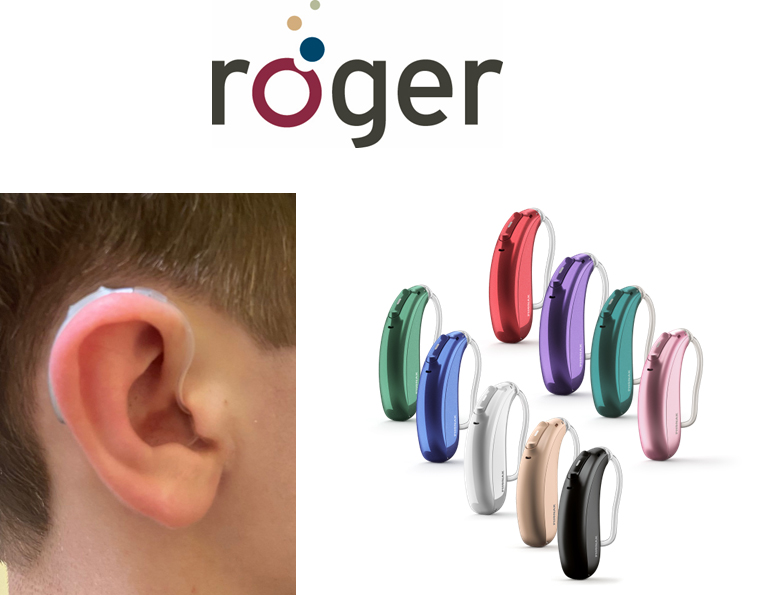
A typical system includes two Roger Focus receivers (ear-level devices) and one teacher or parent microphone. If a child changes classes, the microphone can easily be passed to the next teacher. If multiple children in the same classroom use Roger Focus receivers, the teacher only needs to wear one microphone. A simple push of a button allows the microphone to sync with multiple receivers, making it easy to use across different environments.
Learn More
For more information you can download our brochure on Roger Focus for Auditory Processing Disorder, our brochure on the benefits of Roger Focus for individuals with Autism Spectrum Disorder, and our flyer on Remote Microphone Systems for ADHD.
Nationwide Access — Not Just Local
You do not have to live near our clinic to benefit from this technology.
We work with families across the country to:
- Determine if a remote microphone system is appropriate
- Help you choose the right setup
- Coordinate purchase and delivery
- Provide guidance on use and implementation
If you are considering a remote microphone system, contact Auditory Processing Center so that we can help determine the best option based on your child’s or you specific listening needs.
Take the Next Step
If your child is struggling to listen, even with normal hearing, there is a reason, and there is a solution. We are here to help you determine whether a remote microphone system is the right next step.
Get Started:
- Request pricing and purchase information
- Schedule a consultation
- Ask about short-term rental options
- Contact Auditory Processing Center to learn more
Research Articles and Resources
The following research articles and resources provide additional information on the benefits of remote microphone technology and auditory processing:
- Assistive listening devices drive neuroplasticity in children with dyslexia
- Critical review of remote microphone technology
- FM for children with dyslexia
- Field Study – Roger Focus for auditory processing disorder
- For reading development auditory processing is fundamental
- Transforming education for children with autism spectrum disorder
- Effects of auditory training and remote microphone technology on the behavioral performance of children and young adults who have autism spectrum disorder
- The use of FM systems for children with attention defi cit dsorder
- The use of listening devices to ameliorate auditory deficit in children with autism
- Personal FM systems for children with autism spectrum disorders (ASD) and/or attention-deficit hyperactivity disorder (ADHD): an initial investigation
- Assistive technology evaluations: Remote-microphone technology for children with Autism Spectrum Disorder